
Skip to product information
1 of 9

PIANOVA DIGITAL KEYBOARDS

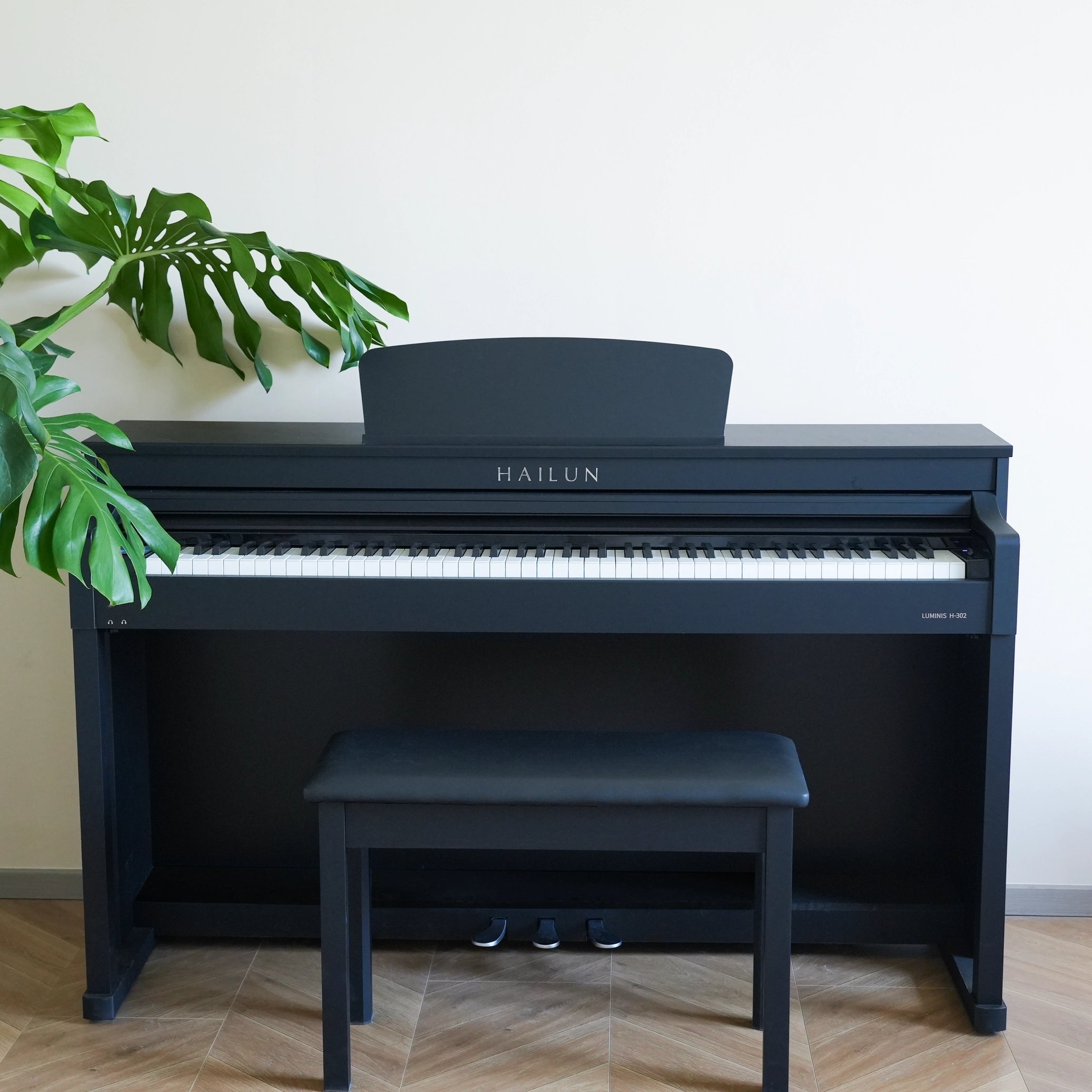
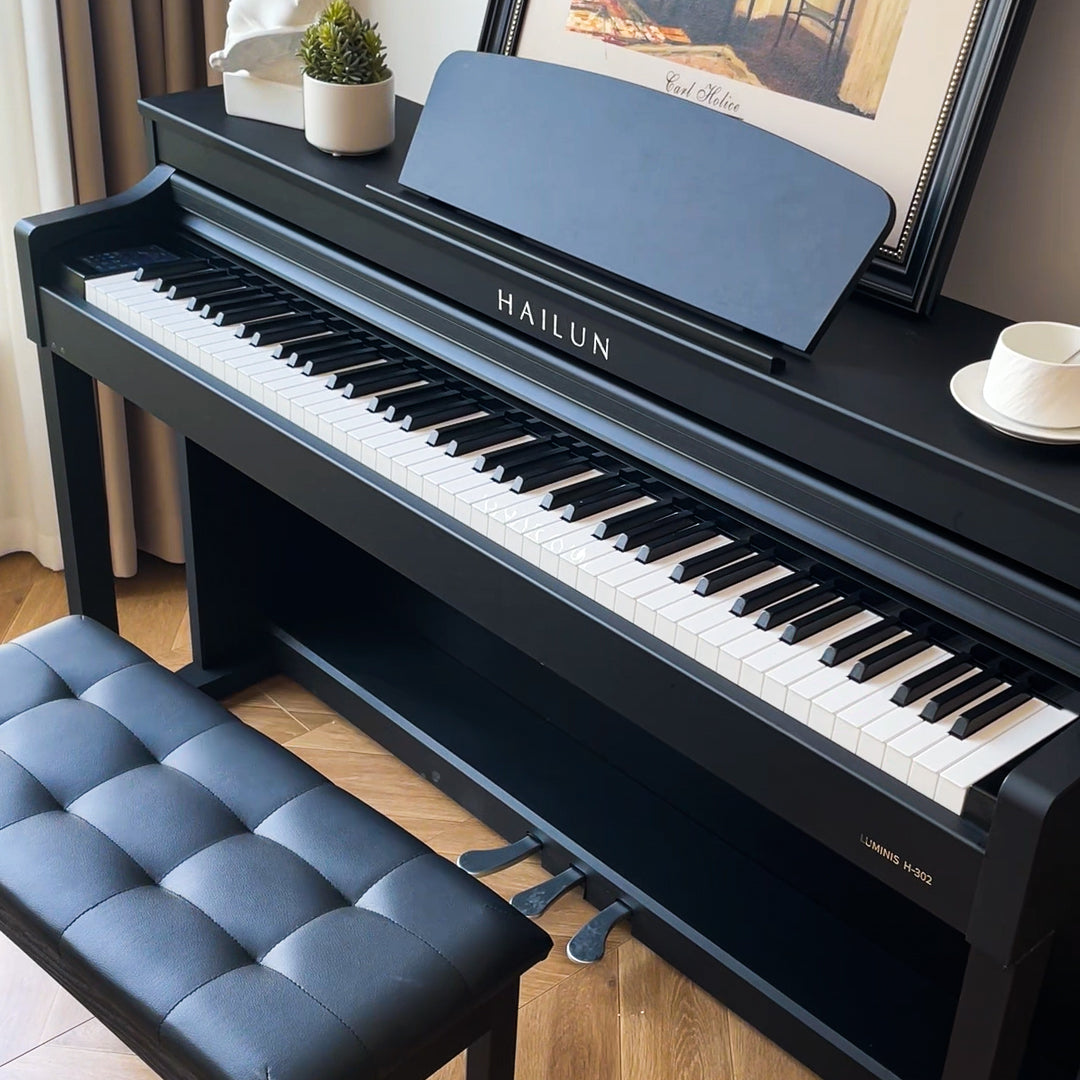
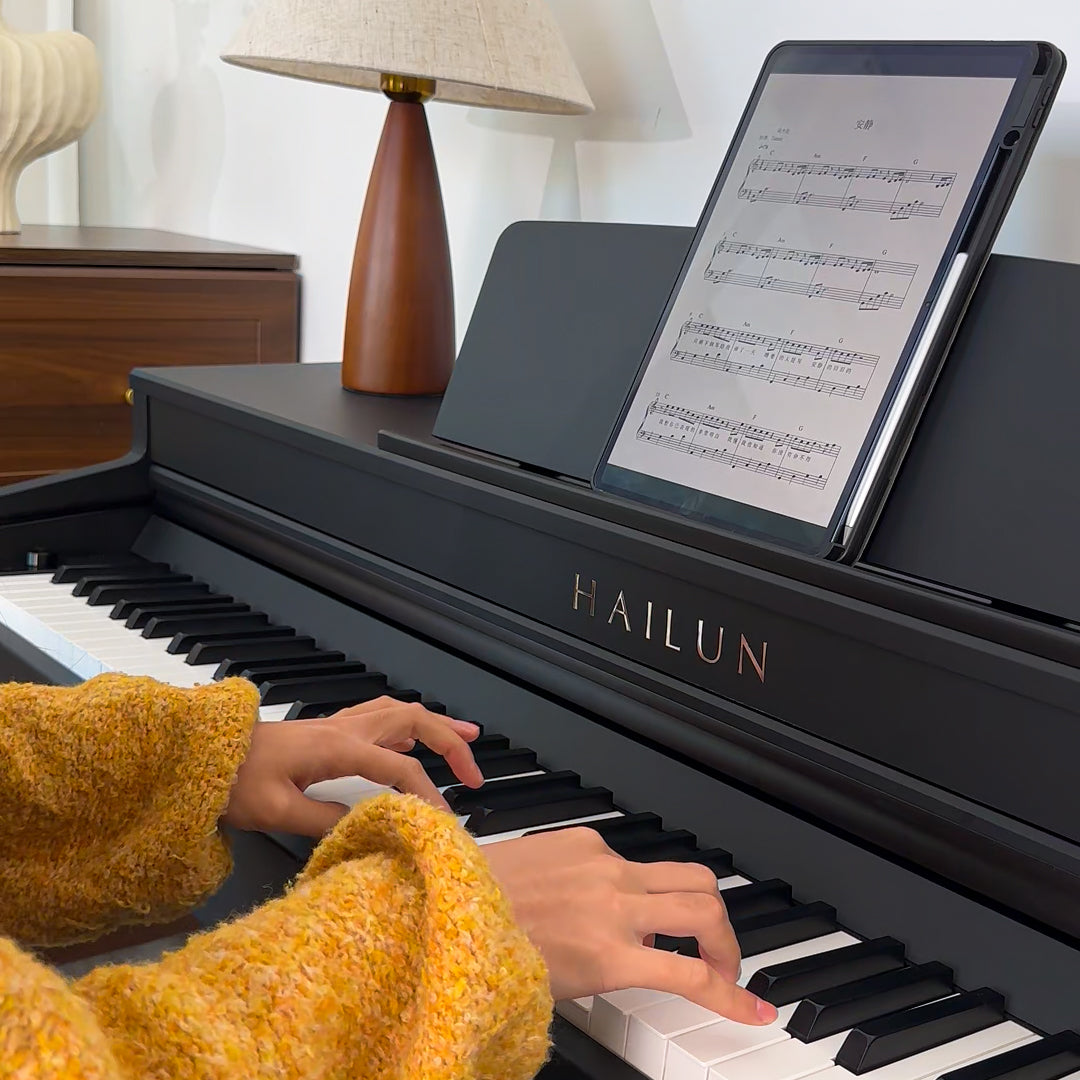
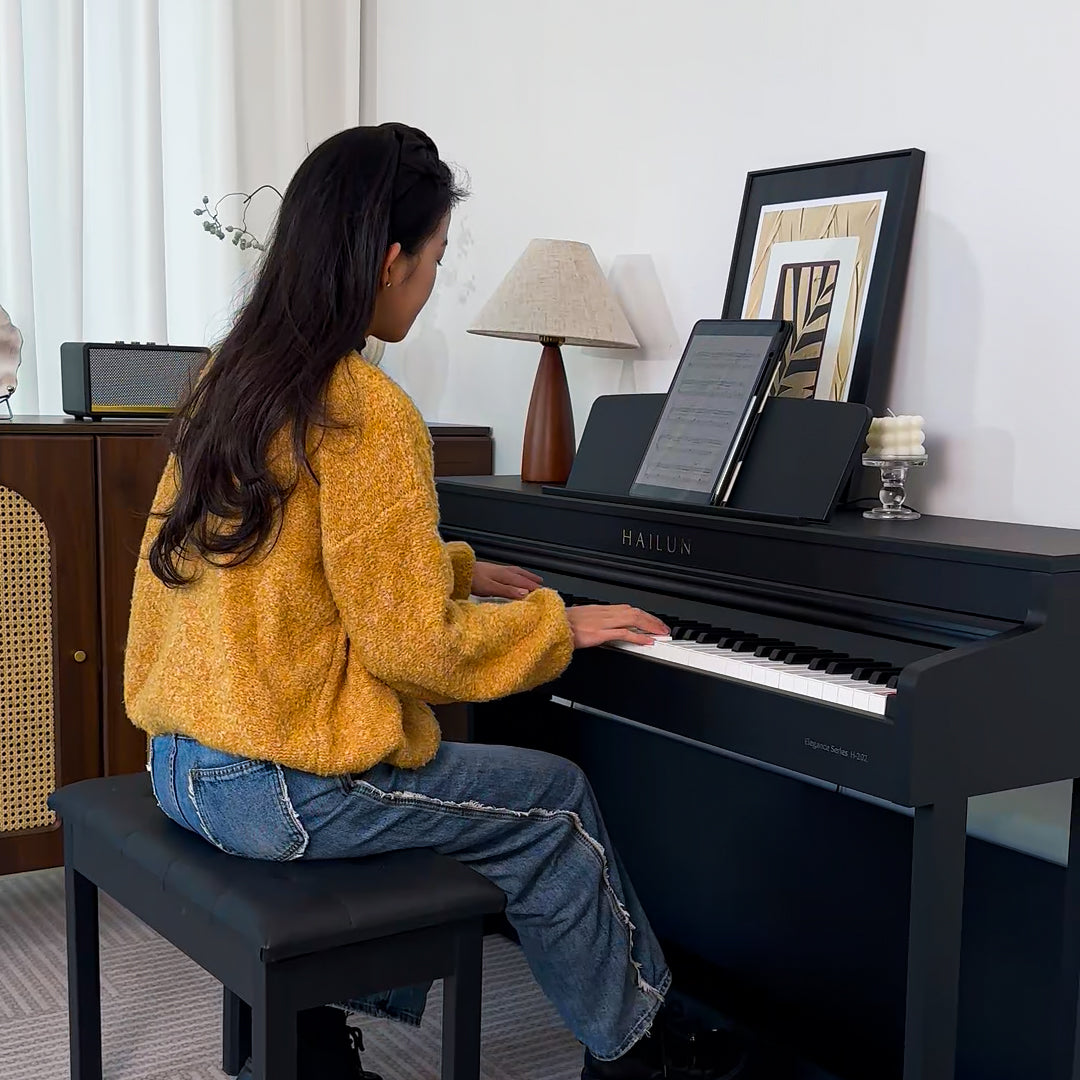
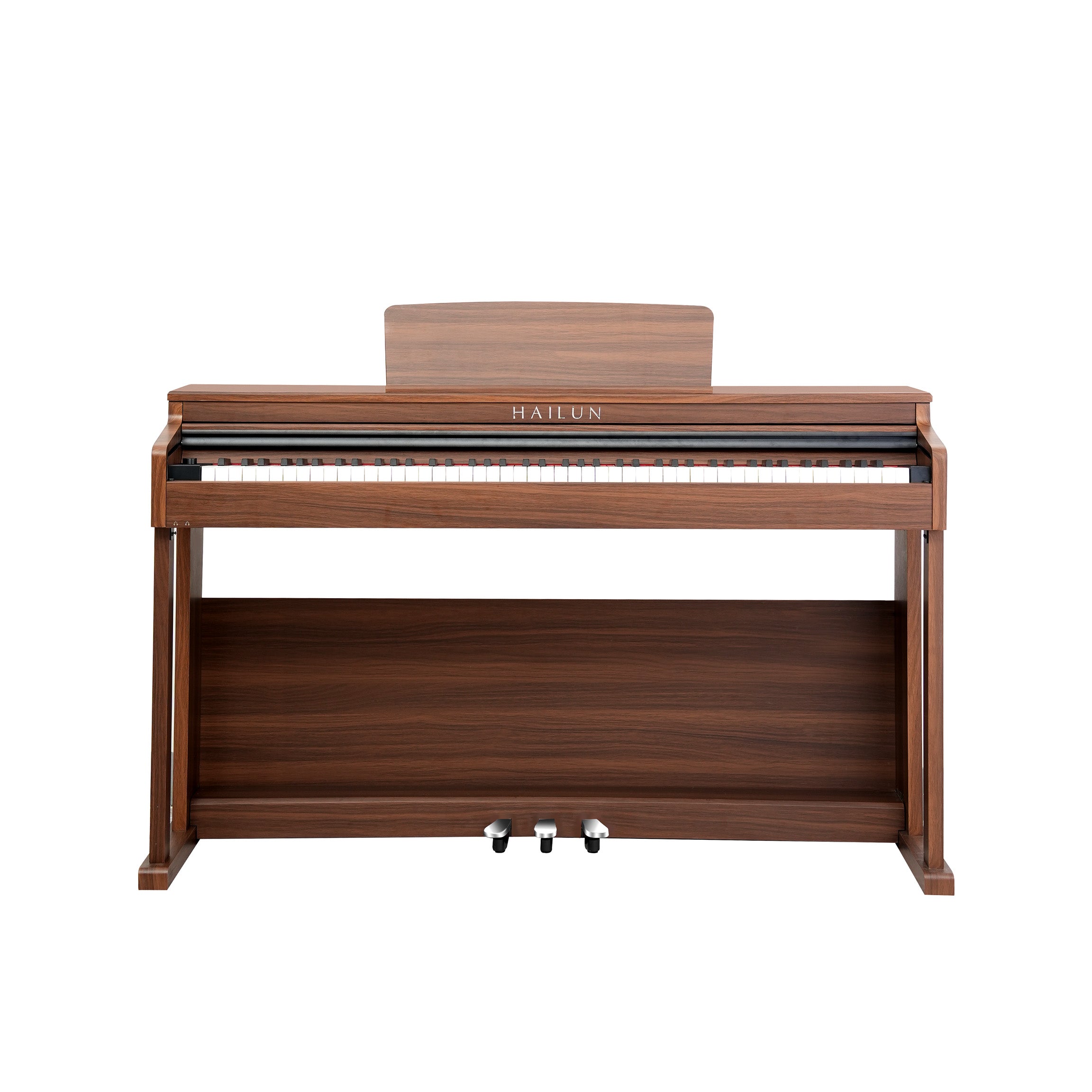
PIANOVA H-302 Digital Piano

Color: Black
Regular price
$2,249.00
Regular price
Sale price
$2,249.00
Tax included. Shipping calculated at checkout.

30-day Return

3 years warranty

  • Hurry, only 1 item left in stock!
  • VPAS-IV Triple-Sensor Action
  • Aetherial Acoustic Engine
  • Pianoheart Spruce Resonance
  • 5" Touchscreen
  • RGB LED Guidance
  • 768-Note Polyphony
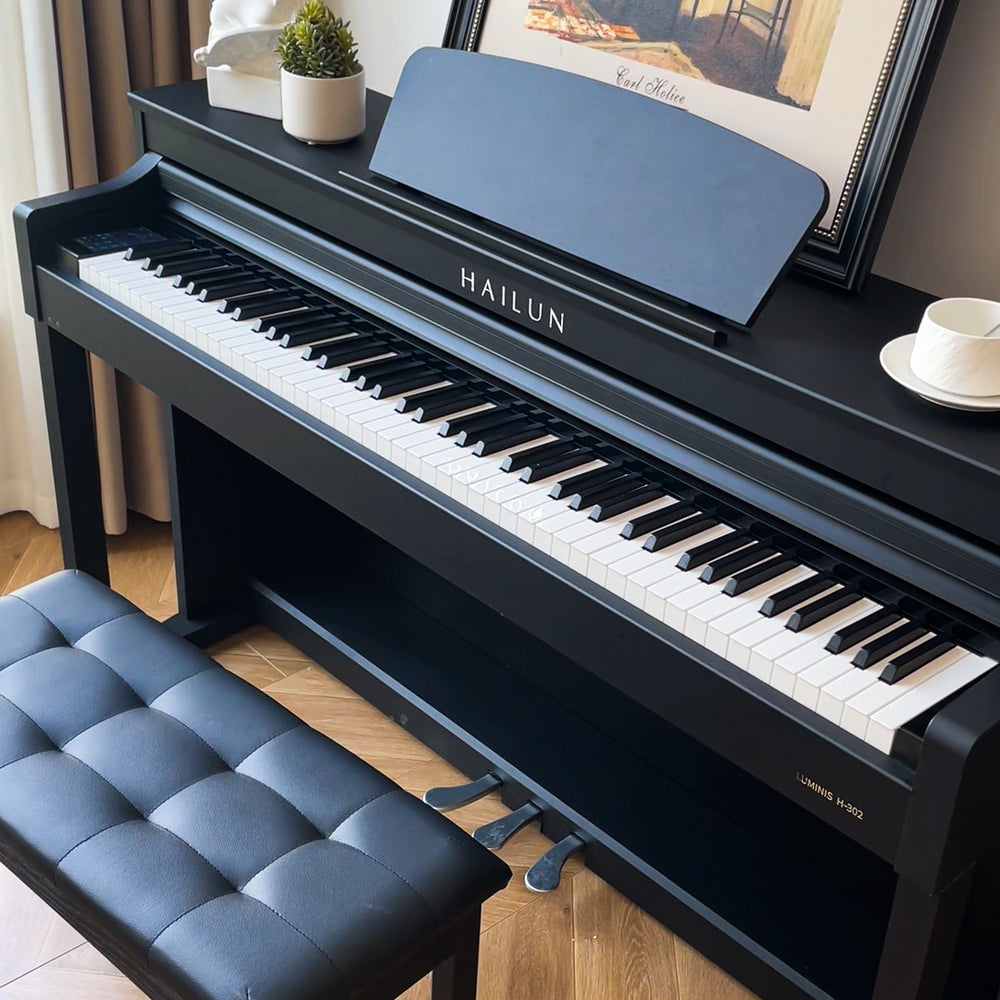
PIANOVA H-302 Digital Piano
See It In Action

PIANOVA H-302 Digital Piano Demo & Sound Test

Watch our demonstration video to hear the sound quality, see the features in action, and get a feel for what this piano can do.

3-Series • Professional Studio

Your Piano. Your Rules.

Practice at midnight. Move it between rooms. Never tune it again. Hailun digital pianos remove every traditional barrier—delivering authentic weighted keys and concert-quality sound without compromise.

0
Weighted Keys
0
Note Polyphony
0
Built-in Tones
$0
Maintenance
Professional Grade

Built for Serious Musicians

The H-302 is built for intermediate to advanced players who need professional-grade features without the $7,000+ price tag of premium console pianos or acoustic grands. The VPAS-IV triple-sensor keyboard captures every nuance—velocity, aftertouch, and release speed—with the precision required for complex classical repertoire, jazz improvisation, or studio recording. This is Hailun's first digital piano with a 5-inch IPS touchscreen running proprietary H-LUMINIS OS, transforming workflow efficiency for serious musicians.

For home studio use, the H-302 outclasses competitors in its price range with WiFi6 dual-band connectivity for zero-latency wireless MIDI streaming and USB-C audio interface functionality for direct DAW recording. The split wood sound chamber and 200W quad-speaker system deliver room-filling sound without external amplification—essential for teaching studios, home practice, or live performance. Bluetooth 5.3, microphone input, and 100 accompaniment styles make this as capable for solo practice as it is for professional applications.

Choose the H-302 when you've outgrown entry-level instruments and need the triple-sensor keyboard response that separates competent playing from artistry. This is the digital piano for serious students preparing for conservatory auditions, professional teachers building home studios, or advanced players who demand concert-level expressiveness at an accessible price point.
PIANOVA H-302 Digital Piano
Key Features

What Makes This Model Different

VPAS-IV Triple-Sensor Keyboard

Professional-grade action captures velocity, aftertouch, and release speed with millisecond precision. Three optical sensors per key deliver concert grand expressiveness for complex classical repertoire, jazz improvisation, or nuanced contemporary composition.

5-Inch IPS Touchscreen Display

Modern capacitive touchscreen running proprietary H-LUMINIS OS transforms workflow efficiency. Intuitive controls for recording, layering sounds, adjusting fine parameters, and accessing advanced features without menu diving.

WiFi6 Wireless MIDI Connectivity

Dual-band WiFi6 enables zero-latency wireless MIDI streaming to your DAW. Connect to music production software like Ableton, Logic Pro, or GarageBand without cables cluttering your studio space.

Split Wood Sound Chamber

Acoustic resonance modeling using real wood construction—not plastic. Creates authentic piano soundboard behavior with sympathetic string resonance, damper noise, and key-off samples for organic, alive tone.

USB-C Audio Interface

Record studio-quality piano directly to your DAW without external hardware. Functions as a class-compliant audio interface for seamless integration with professional recording workflows.

200W Quad-Speaker System

Four-speaker configuration (2×5.5" + 2×3") powered by 200 watts delivers room-filling sound without external amplification. Essential for teaching studios, home practice, or live performance applications.

Why Choose Hailun

Not Just Digital. Hailun.

Built by piano makers with 30 years of acoustic craftsmanship—not consumer electronics brands.

Piano Heritage

Since 1995, Hailun has built acoustic pianos for concert halls and conservatories worldwide. Our digital pianos inherit decades of piano craftsmanship.

30 Years | 15+ Awards
ircle cx="6" cy="18" r="3"3"> ircle cx="18" cy="="16" r="3">

Superior Sound

10-layer sampling from Hailun acoustic grands (vs 2-4 layers in competitor models). Deeper tonal gradation from pianissimo to fortissimo.

10 Layers | 16GB Sound Bank

Real Craftsmanship

Spruce resonance chambers add acoustic warmth. Graded hammer action mimics real piano feel. This is an instrument, not a gadget.

Spruce Chambers | Triple Sensors

Technical Specifications

Keyboard

Number of Keys
88 full-size
Key Type
VPAS-IV triple-sensor graded hammer action
Velocity Sensitivity
Yes (adjustable
Key Surface
Simulated ebony/ivory texture
Escapement
Triple-sensor with let-off simulation
Key Weight
Graded (heavier in bass, lighter in treble)

Sound Engine

Sampling
10-layer loop-free from Hailun acoustic grands
Sound Engine
Aetherial Acoustic Engine (AAE)
Sound Bank Capacity
16GB
Maximum Polyphony
768 notes
Built-in Tones
348 tones (includes global instrument library)
Sympathetic Resonance
Yes (string resonance simulation)
Damper Resonance
Yes
Key-Off Simulation
Yes

Functions

Accompaniment Styles
100 professional styles
Demo Songs
30 built-in
Recording
Multi-track recording, unlimited song storage (USB/Cloud)
Metronome
Yes, visual + audio metronome
Transpose
-12 to +12 semitones
Tuning
415.3 Hz to 466.2 Hz (A440 standard)
Dual Mode
Yes (layer up to 4 voices)
Split Mode
Yes (multi-zone split)
Temperament
Equal, Just, Pythagorean, Meantone, Werckmeister, Kirnberger

Connectivity

WiFi
WiFi6 (802.11ax) 2.4GHz/5GHz dual-band
Bluetooth
Bluetooth 5.2 (MIDI + Audio)
USB
USB-C (MIDI, Audio, charging, firmware updates)
Headphone Output
2 × 6.35mm (1/4") stereo jacks
Audio Input
3.5mm AUX in
Microphone Input
6.35mm XLR/TRS combo jack with phantom power
Pedal Interface
3-pedal input (sustain, sostenuto, soft)

Pedals

Pedal System
CadenceCruise® optical linear pedals
Half-Pedal Support
Yes (continuous damper control)
Configuration
3 pedals (sustain, sostenuto, soft)

Speakers

Configuration
3-way system (4 woofers + 2 tweeters)
Total Power
200W (4 × 30W woofers + 2 × 50W tweeters)
Speaker Size
Quad 12cm woofers + dual silk-dome tweeters
Resonance System
Dual monolithic spruce resonance chambers
Acoustic Modeling
Soundboard resonance simulation

Display

Type
5-inch IPS touchscreen
Resolution
800×480 pixels
Interface
Full-color GUI with OTA firmware updates
Languages
English, Chinese, Spanish, German, French, Japanese
Brightness
Adjustable, auto-dimming

Dimensions & Build

Dimensions
144.9cm × 47.4cm × 87.2cm (57" × 18.6" × 34.3")
Weight
60kg (132.3 lbs)
Cabinet Material
Wood composite + aluminum accents + tempered glass
Finish
Premium black satin with brushed metal details

Power

Power Supply
100-240V AC, 50/60Hz (auto-switching)
Power Consumption
100W
Auto Power-Off
Yes, adjustable (5-240 minutes)

Advanced Features

WiFi Streaming
Stream audio to external devices via WiFi
Microphone Features
XLR input with AI pitch correction, voice effects, karaoke mode
Cloud Integration
Cloud storage for recordings, OTA firmware updates
App Integration
Pianist app (iOS/Android) for remote control, sheet music, lessons
MIDI Over WiFi
Yes, wireless MIDI to DAW software
Voice Assistant
Compatible with voice commands (future update)

What's Included in the Box

Everything needed to start playing arrives in one package. Simple 30-minute assembly with no special tools or professional installation required.

1

Piano Body

Pre-assembled main unit with keyboard, speakers, and control panel

2

Side Plates (2 pieces)

Decorative panels for left and right sides

3

3-Pedal Assembly

Sustain, sostenuto, and soft pedals with CadenceCruise® half-pedal support

4

Power Adapter

100-240V auto-switching universal power supply (works worldwide with plug adapter)

5

Assembly Hardware

All screws, bolts, and fasteners needed (screwdriver included)

6

User Manual

Complete guide in English and Chinese with illustrated assembly instructions

7

USB-C Cable

For MIDI connection, firmware updates, and device charging

8

Warranty Card

Hailun standard warranty registration card

Frequently Asked Questions

Have questions? Find answers below.

How is the H-302 different from the 2-Series (H-201/202/205)?

How is the H-302 different from the 2-Series (H-201/202/205)?

Five major upgrades: (1) VPAS-IV keyboard adds key-release detection for advanced articulation, (2) Aetherial Acoustic Engine vs 10-layer sampling, (3) WiFi6 connectivity (2-Series has Bluetooth only), (4) Microphone input with AI pitch correction, (5) 5-inch IPS touchscreen vs basic TFT LCD. The H-302 is designed for professionals and content creators, while 2-Series targets students and home learners. Sound quality and keyboard feel are noticeably superior in 3-Series.

What's the difference between H-302 and H-305?

What's the difference between H-302 and H-305?

Identical keyboards, sound engines, WiFi, microphone systems, and touchscreens. Two differences: (1) H-305 has 6 speakers vs 4 (same 200W total, but better stereo imaging), (2) H-305 uses monolithic spruce chamber vs split chamber (slightly fuller bass resonance). The H-302 delivers 90% of H-305 performance at lower cost and lighter weight (68kg vs 79kg). Choose H-305 only if you're performing in large venues regularly or are an audiophile prioritizing every 1% of acoustic realism.

Do I need WiFi if I already have Bluetooth?

Do I need WiFi if I already have Bluetooth?

WiFi6 offers several advantages Bluetooth cannot: (1) Wireless firmware updates without connecting USB cables, (2) Cloud storage of recordings (upload directly to Google Drive/Dropbox from piano), (3) Lower latency for remote lessons and streaming, (4) Use piano as wireless MIDI controller for desktop DAWs at near-zero latency. Bluetooth is fine for connecting to learning apps on tablets; WiFi enables professional workflows and future-proofs the instrument as cloud services expand.

What microphones work with the AI pitch correction?

What microphones work with the AI pitch correction?

Any XLR dynamic or condenser microphone. Dynamic mics (Shure SM58, SM57) connect directly—no phantom power needed. Condenser mics (Audio-Technica AT2020, Rode NT1-A) require phantom power, which the H-302 provides via +48V button on touchscreen. The AI pitch correction works with any mic input and is adjustable from 0% (natural voice) to 100% (heavy Auto-Tune effect). Most users set it to 30-50% for subtle pitch smoothing.

Can I use the H-302 for live streaming on Twitch or YouTube?

Can I use the H-302 for live streaming on Twitch or YouTube?

Yes. Connect via USB Type-C to your computer, and the H-302 appears as a 2-channel audio interface in OBS, Streamlabs, or any streaming software. Channel 1 = piano audio, Channel 2 = microphone audio. Mix levels on the piano's touchscreen, then route both channels to your stream. No external audio interface needed. For split-track control (adjust piano vs mic volume independently in OBS), route each channel separately. Latency is low enough for real-time performance commentary.

Is the VPAS-IV keyboard worth the upgrade from VPAS-III?

Is the VPAS-IV keyboard worth the upgrade from VPAS-III?

For advanced players (Grade 9+ or professional), yes. The key-release sensor enables techniques impossible on VPAS-III: precise staccatissimo note length, dynamic voicing in complex chords, and continuous half-pedal control for sostenuto passages. For intermediate students (Grades 3-8), VPAS-III in the H-202 is sufficient—you won't utilize VPAS-IV's advanced sensitivity until reaching late-Romantic or contemporary classical repertoire (Rachmaninoff, Prokofiev, Ligeti).

How does the Aetherial Acoustic Engine differ from 2-Series sampling?

How does the Aetherial Acoustic Engine differ from 2-Series sampling?

2-Series uses 10-layer sampling: pre-recorded audio triggered at different velocities. Aetherial Engine combines sampling with physical modeling—it simulates how acoustic pianos behave (sympathetic string resonance, damper noise, key-off articulation). When you play C, the G and E strings vibrate naturally, just like acoustic grands. When releasing sustain pedal, you hear the mechanical damper thunk. These subtle details separate $50,000 concert grands from $2,000 practice pianos. In blind tests, listeners struggle to distinguish Aetherial Engine from high-end acoustics.

Can I update the H-302's software to add new features?

Can I update the H-302's software to add new features?

Yes, via OTA (over-the-air) updates. Connect to WiFi, check for updates in settings menu, and new firmware installs automatically. Hailun regularly releases updates adding new sounds, improving AI pitch correction algorithms, fixing bugs, and occasionally adding entirely new features. This is impossible on 2-Series models, which require manual USB firmware flashing. The H-302 improves over time without hardware upgrades.

Is the H-302 suitable for conservatory students and professional performances?

Is the H-302 suitable for conservatory students and professional performances?

Yes for conservatory practice and small-venue performances (recitals, teaching studios, church services). For large concert halls, acoustic grands remain standard. However, many professionals use the H-302 as a silent practice instrument to supplement their acoustic piano—practice at midnight without disturbing neighbors, record demos for audition submissions, or rehearse with microphone for vocal accompaniment. The VPAS-IV keyboard and Aetherial Engine meet professional expectations for home practice and most public performances.

How much does the microphone feature add to the price compared to 2-Series?

How much does the microphone feature add to the price compared to 2-Series?

Exact pricing TBD, but the microphone system (XLR input + phantom power + AI pitch correction + USB audio interface) would cost $300-500 if purchased separately. Combined with WiFi6, touchscreen, and Aetherial Engine, the H-302's premium over H-202 represents significant value for content creators and performers who would otherwise buy external audio equipment.

Still Have Questions?

Our team is here to help you find the perfect digital piano. Get personalized advice and answers to any questions not covered above.

Contact Us